Skip to content

Obama-Chesky Voyager helps preserve his Indigenous culture

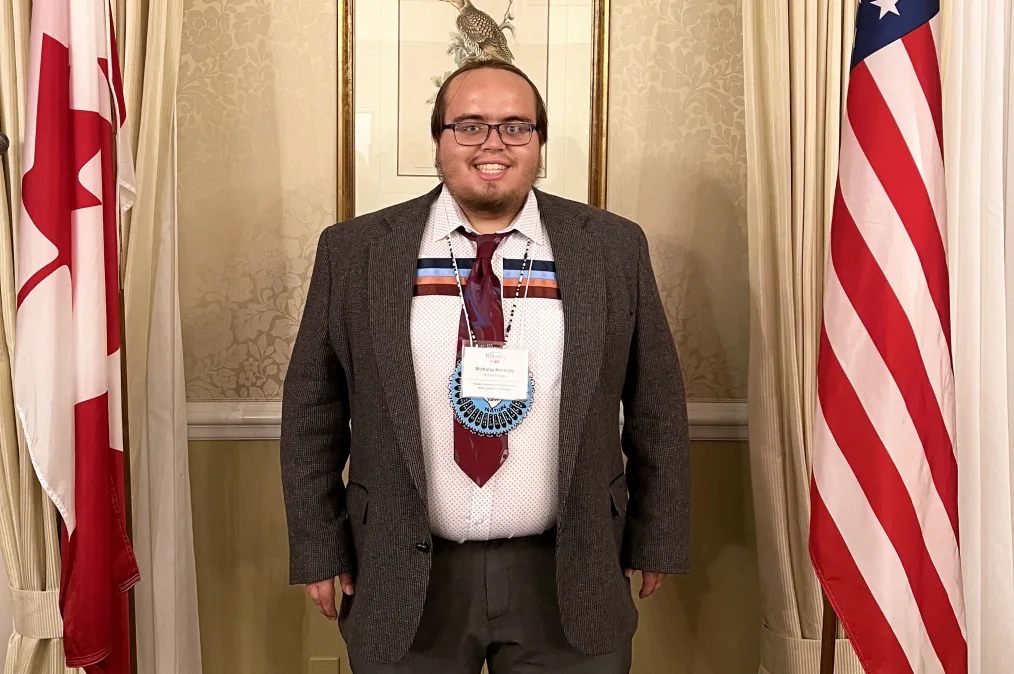
Nick Kennedy, a college-age Native American young man, stands in between a Canadian and American flag on flag poles. He is wearing a brown suit and a white name tag around his neck.

Nick Kennedy, a 2022-2024 Obama-Chesky Scholarship for Public Service recipient , is a rising leader who is proud of his Indigenous culture.  In his personal life and through his collegiate studies at the University of South Dakota, Nick is advocating for the preservation of Indigenous culture and traditions.

Ahead of Indigenous Peoples’ Day, we spoke with the Voyager about his recent Summer Voyage, his passion for preserving his family's history, and what’s next for the young changemaker.

Growing up in Lawrence, Kansas in an urban Native community, Nick missed the opportunity to be surrounded by his Blackfoot culture. It was during his time studying abroad at the University of Calgary that Nick’s inspiration for a career in law strengthened.

Nick’s great grandparents were both boarding school survivors (Opens in a new tab) . Recent studies have described Native American boarding schools as dangerous, identity stripping, and in many ways physically and mentally unsafe.

“In that period of American history, Indigenous People were stripped of their culture and language,” Nick explained. “Not growing up in my culture, it felt like it was necessary to sort of preserve what is left in terms of Indigenous culture and Blackfoot culture.”

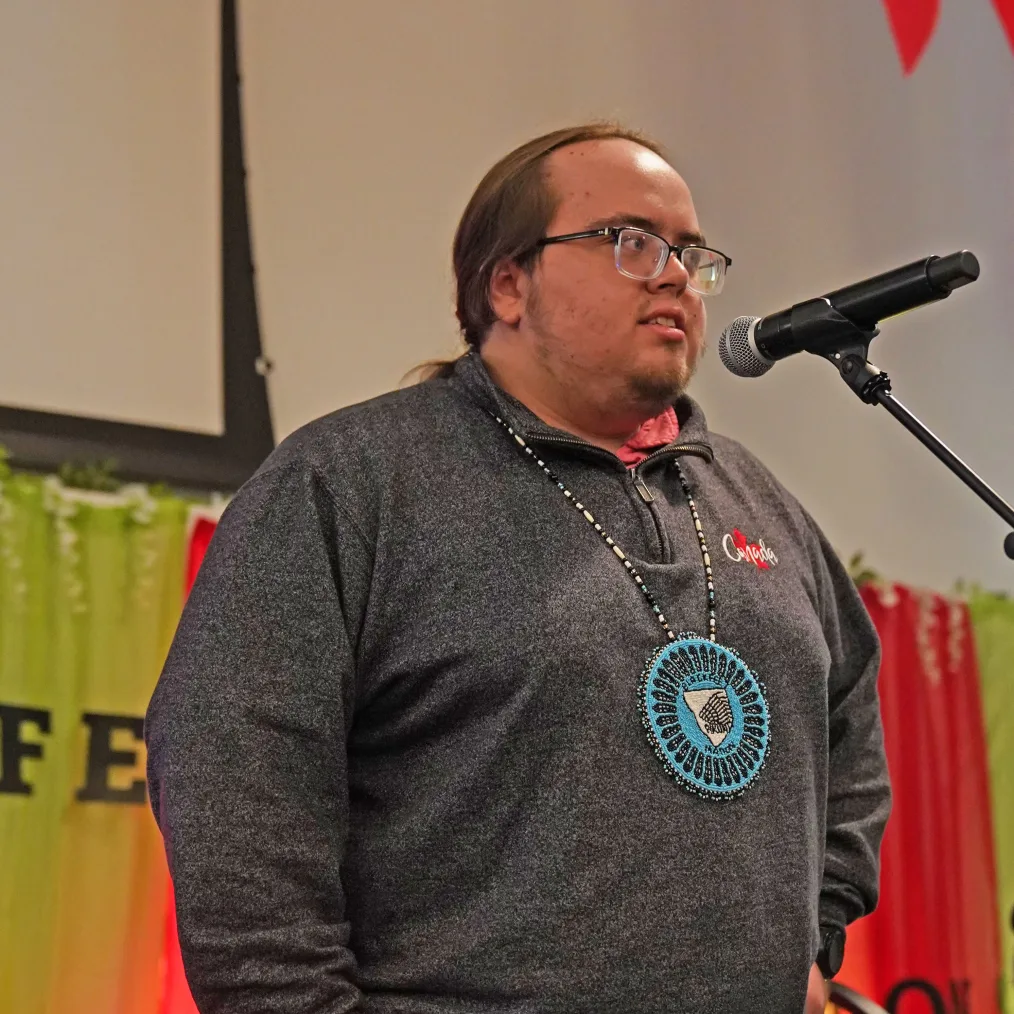
Nick Kennedy, a college-age Native American young man, stands at a microphone while addressing a small crowd.

There is a contemporary component to indigeneity. We are living in the present, here and now.”

Nick Kennedy

As he’s continued his higher education studies, Nick has found that an effective way to advocate for his people is through the retention of cultural practices and sovereignty. His long-term goal is to become a lawyer and examine the legal disparities in reservation communities.

“I feel like doing that as an attorney would blend my intellectual interests relating to Blackfoot culture and the law, specifically the sovereignty of Indigenous People,” Nick shared. “And by becoming an attorney I’d be able to navigate those systems a little bit better.”

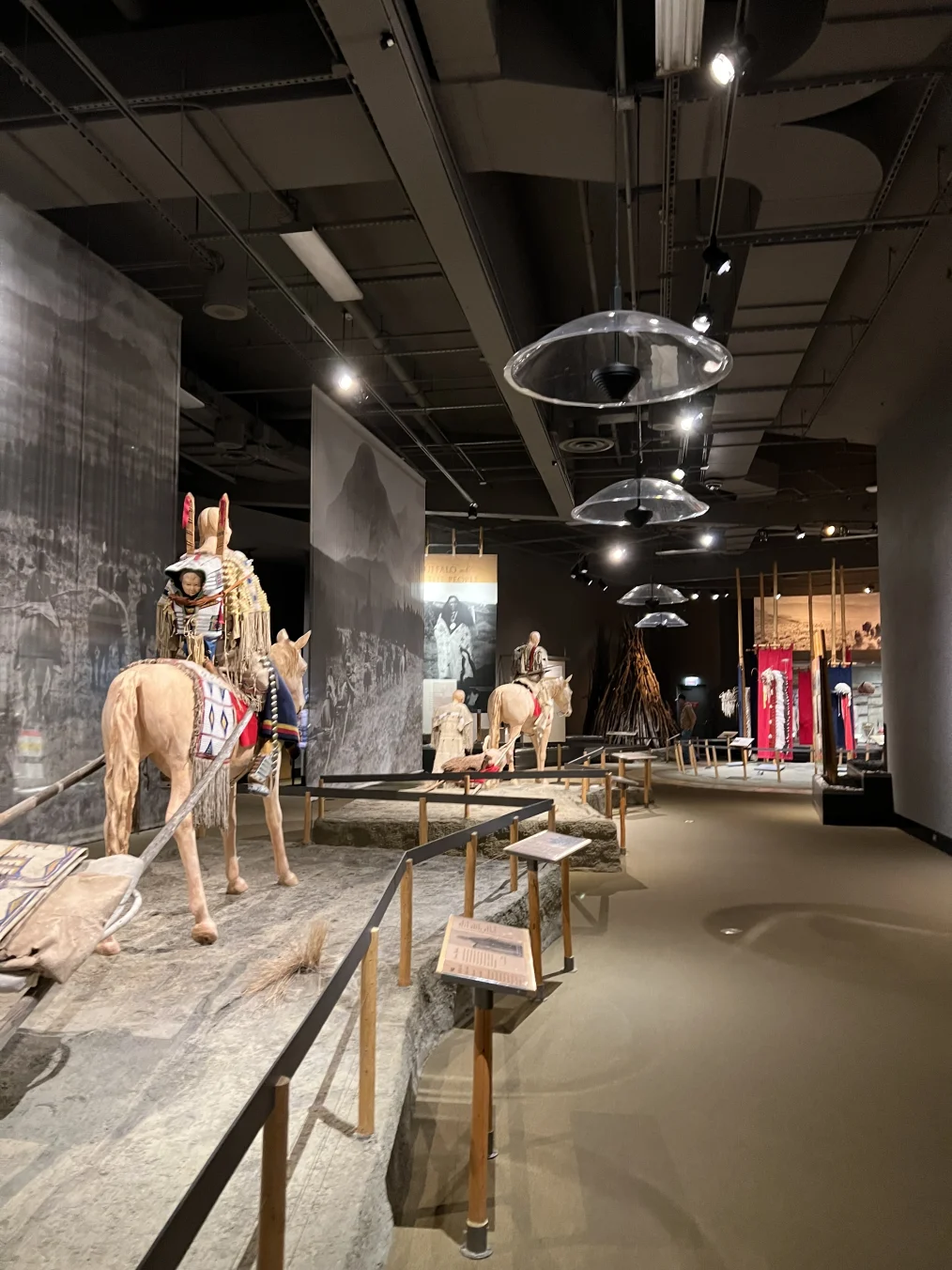
As part of the Obama-Chesky Scholarship for Public Service program, Nick chose to spend his Summer Voyage at The Plains Indian Museum (Opens in a new tab) in Cody, Wyoming, which is part of the Buffalo Bill Center of the West (Opens in a new tab) . Throughout his time at the museum, he worked closely with artifacts that highlighted the lives of Plains Indian peoples, cultures, and traditions.

Inside an exhibit at the Plains Indian Museum in Cody, Wyoming. Indian artifacts, in addition to faux horse stations, can be seen in this exhibit space.
Inside the Plains Indian Museum in Cody, Wyoming, where Nick Kennedy spent his Summer Voyage.

As October 9 marks Indigenous Peoples’ Day, Nick reflected on what the cultural holiday means to him.

“To me every day is Indigenous Peoples’ Day,” Nick said. “I think about Blackfoot culture everyday, especially since that was something that was taken away from my family. I think Indigenous Peoples’ Day is an excellent opportunity for an educational day. Indigenous People are not a monolithic people. There are many different tribes, each with their own history, traditions, and ways of doing things. I’m happy that people are recognizing the day more, and I think ultimately with these types of recognition there should be more outreach and education to other non-Indigenous, so that people understand different ways of knowing.”

Nick’s advice to those wondering how they can honor Indigenous People on this cultural day: Try and view things from the tribal perspective.

“If I were to encourage someone to do more research, I would first tell them to prioritize Indigenous scholars and Indigenous sources. If you want to know more about a specific tribe or a specific community, I would encourage them to look at each of the tribal nation’s websites.”

Ultimately, every tribal nation has different unique cultural practices, and you can’t classify them all as one people, Nick explained.

“It’s also important to realize Indigenous People are contemporary people; they’re not somebody that’s living in the past. Say, bows and arrows. There is a contemporary component to indigeneity. We are living in the present, here and now.”

*Nick Kennedy is a First-Generation Registered Descendant of the Blackfeet Nation. He is also a descendant of the Confederated Salish-Kootenai Tribes in Western Montana.
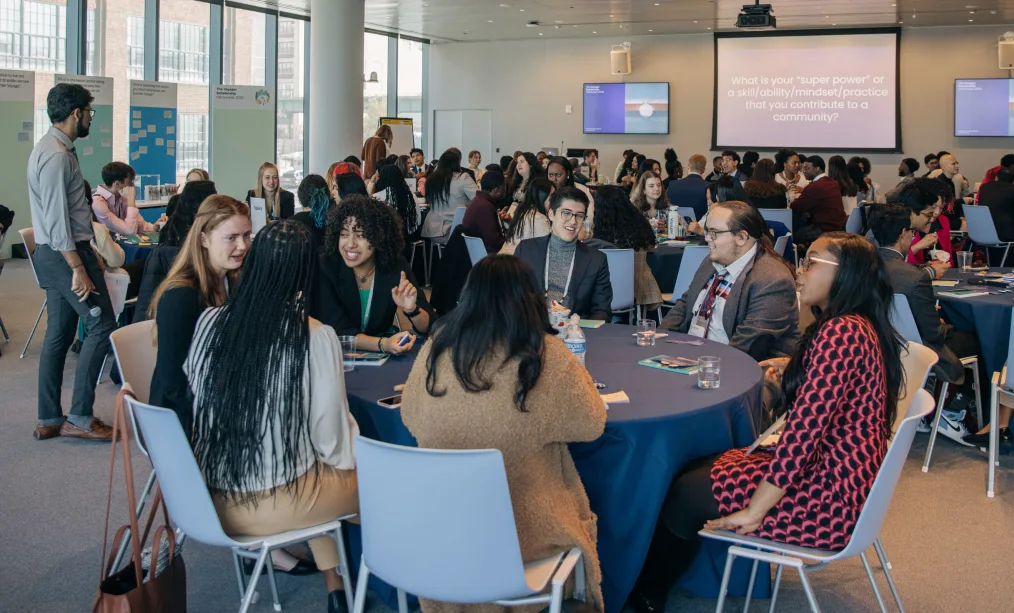
Nick Kennedy sits with six other young adults and fellow Obama-Chesky Voyagers at a round table at the 2022 Democracy Forum in New York City. The young leaders are of all races and the room is full of young people mingling with one another.
IMG-2316

How an Obama leader is making a difference in a Texas immigrant community

Learn more
Image (1)

Obama scholar advocates for youth mental health

Learn more

Donate
Today

We need your help to turn hope into action—to inspire, empower, and connect people to change their world.

Visit
  • 6001 S. Stony Island Ave.
  • 1-(773)-900-0044
  • The Museum

    The Obama Presidential Center Museum is a world-class landmark that tells the story of our democracy through the lens of America’s first Black president and First Lady. Dynamic exhibits across four floors will highlight the events, policies, challenges, and accomplishments of the Obama presidency. The Museum is comprised of four levels of exhibitions and the Sky Room, a 5,000 square foot space that offers soul-stirring perspective and panoramic views of Chicago. Entry to the Museum is by time-ticket or event participation. Monday | 1 - 8 p.m. CTTuesday - Sunday | 10 a.m. - 5 p.m. CT

  • Forum Building

    The Forum Building is a vibrant community center that celebrates creativity and innovation. The Forum’s two levels are brought to life through power performances at the Elie Wiesel Auditorium, creative forms of expression in the Media Suite, and collaborative thinking in the Democracy in Action Labs. The Forum also features the Hadiya Pendleton Atrium, Tafari’s Kitchen, our Cafe, two courtyards, and one-of-kind pieces of art by Theaster Gates, Spencer Finch, and Tyanna Buie. Monday | 1 p.m. - 8 p.m. Tuesday-Sunday | 10 a.m. - 5 p.m.

  • Home Court

    Home Court is a 60,000-square-foot athletic and events space designed to strengthen the entire community and motivate people of all ages. Home Court offers programs inspired by President Obama's belief in the power of sports, mentorship, and connection. The two level space includes an NBA-sized regulation basketball court, seven flexible multipurpose rooms, two outdoor courtyards, and several multi-level seating areas for visitors.Monday - Sunday 12 p.m. - 8 p.m. CT

  • Chicago Public Library, Obama Presidential Center Branch

    Libraries are the beating heart of a strong democratic culture. Here we welcome local residents, scholars, and visitors from around the world to connect, reflect, and act. The Obama Presidential Center campus features a new branch of the Chicago Public Library that celebrates the rich history of Chicago’s public libraries and the powerful legacy of the Obamas. The Library Branch includes a YOUMedia Suite, a City Maker’s Space, a Children’s Area, and the exclusive President’s Reading Room, a collection of written works that reflect the interests, histories, and readings of President and Mrs. Obama.Mon & Wed12 - 8 p.m. CTTues & Thur10 a.m. - 6 p.m. CTFri & Sat9 a.m. - 5 p.m. CTSun1 -5 p.m. CT

The Obama Foundation is a nonpartisan 501(c)(3) nonprofit organization on a mission to inspire, empower, and connect people to change their world. Read more  about our tax-exempt status.

© 2026 The Barack Obama Foundation.